AI Sales Agent vs. AI Sales Copilot
 Patrick Joubert2025-06-15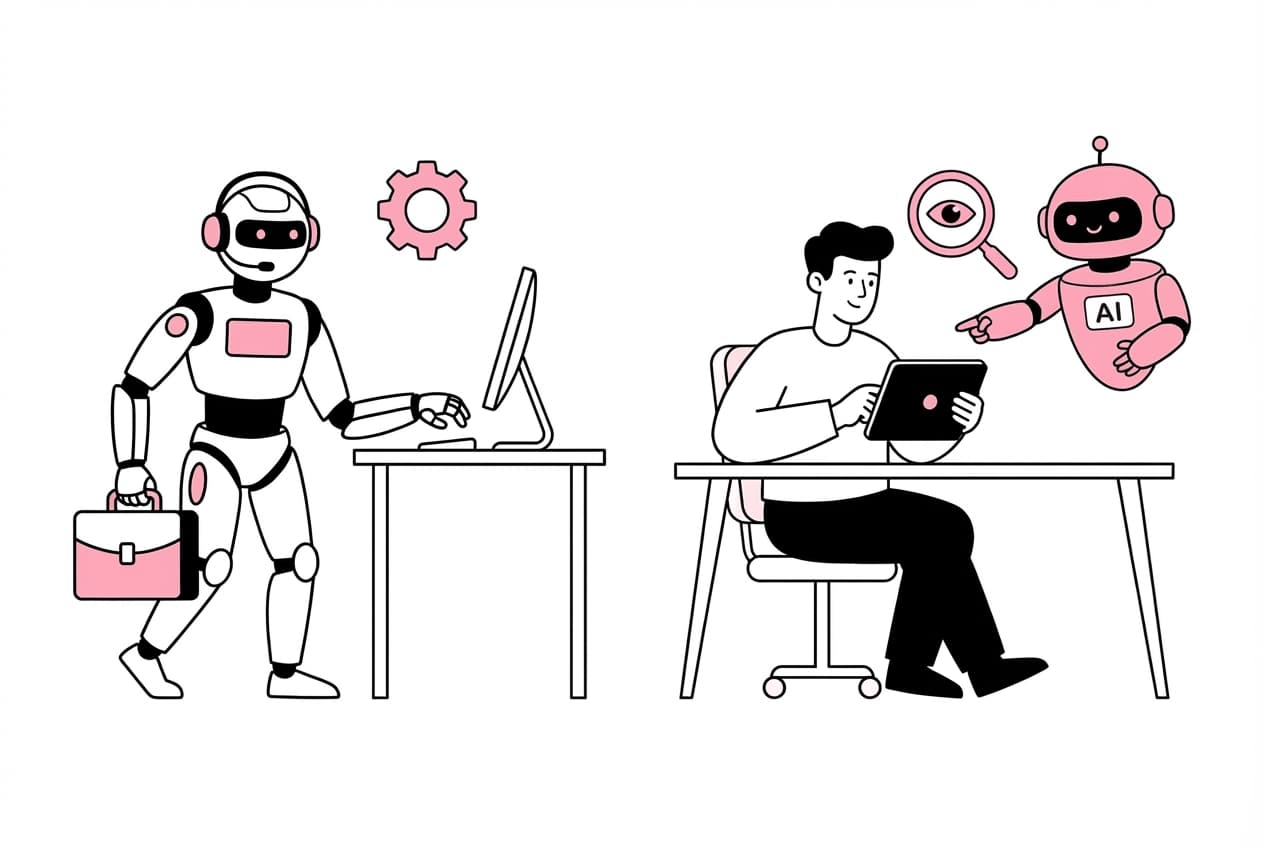
The terms "AI agent" and "AI copilot" are often used interchangeably in sales technology conversations. This is a mistake. They solve fundamentally different problems, operate in different modes, and deliver different outcomes. Understanding the distinction is essential for making the right investment.
AI Sales Agents: Autonomous Volume Machines
An AI sales agent operates independently. It owns the conversation end to end, from the moment a lead enters the funnel through qualification, objection handling, and meeting booking. No human is required in the loop for routine interactions.
Agents are purpose-built to solve the volume bottleneck. When your team receives more inbound leads than your SDRs can handle, leads go cold. Response times stretch from minutes to hours. Conversion rates plummet. An AI agent eliminates this problem by engaging every lead in under one minute, regardless of time zone, day of week, or team capacity.
The results are measurable: organizations deploying AI sales agents report up to 38 percent more meetings booked, driven primarily by the dramatic improvement in speed to lead and the agent's ability to persist through multi-touch follow-up sequences that human reps often abandon.
AI Sales Copilots: Human Amplifiers
A copilot takes the opposite approach. It sits alongside your reps, augmenting their capabilities rather than replacing their involvement. Copilots suggest real-time responses during live calls, auto-generate follow-up emails, summarize meeting notes, and surface relevant context from the CRM.
The value of a copilot is measured in velocity and win rate. Reps armed with copilots close deals up to 15 percent faster because they spend less time on administrative tasks and more time on strategic selling. The copilot handles the cognitive overhead so the rep can focus on building relationships and navigating complex negotiations.
When to Deploy Each
The decision framework is straightforward. If your primary constraint is lead volume, meaning you have more inbound than your team can touch, deploy an agent first. If your primary constraint is deal velocity, meaning leads are being worked but cycles are too long, deploy a copilot first.
The Best Strategy: Deploy Both Sequentially
The most effective sales organizations deploy both, sequentially. The AI agent handles the top of the funnel: instant engagement, qualification, and meeting booking. Once a lead is qualified and a meeting is scheduled, the copilot takes over, supporting the human rep through discovery, proposal, negotiation, and close.
This layered approach creates a seamless pipeline where no lead is wasted and no rep is bogged down. The agent maximizes output per rep by handling volume autonomously. The copilot maximizes output per hour by accelerating every human interaction. Together, they transform the entire revenue operation.
Frequently Asked Questions
An AI sales agent operates autonomously — it owns the conversation from lead engagement through meeting booking without human intervention. A copilot sits alongside reps, suggesting responses, summarizing calls, and drafting emails while the human stays in the loop.
Deploy an agent first if your primary constraint is lead volume (more inbound than your team can handle). Deploy a copilot first if your constraint is deal velocity (leads are being worked but cycles are too long).
Yes. The most effective strategy is deploying both sequentially — the agent handles top-of-funnel (instant engagement, qualification, meeting booking) while the copilot supports reps through discovery, negotiation, and close.
Organizations deploying AI sales agents report up to 38% more meetings booked, driven by sub-60-second response times and persistent multi-touch follow-up sequences.
 Yann Bilien
 Patrick Joubert