Building a Culture of Innovation, Empowerment, Accountability, and Collaboration at Rippletide
 Patrick Joubert2025-02-07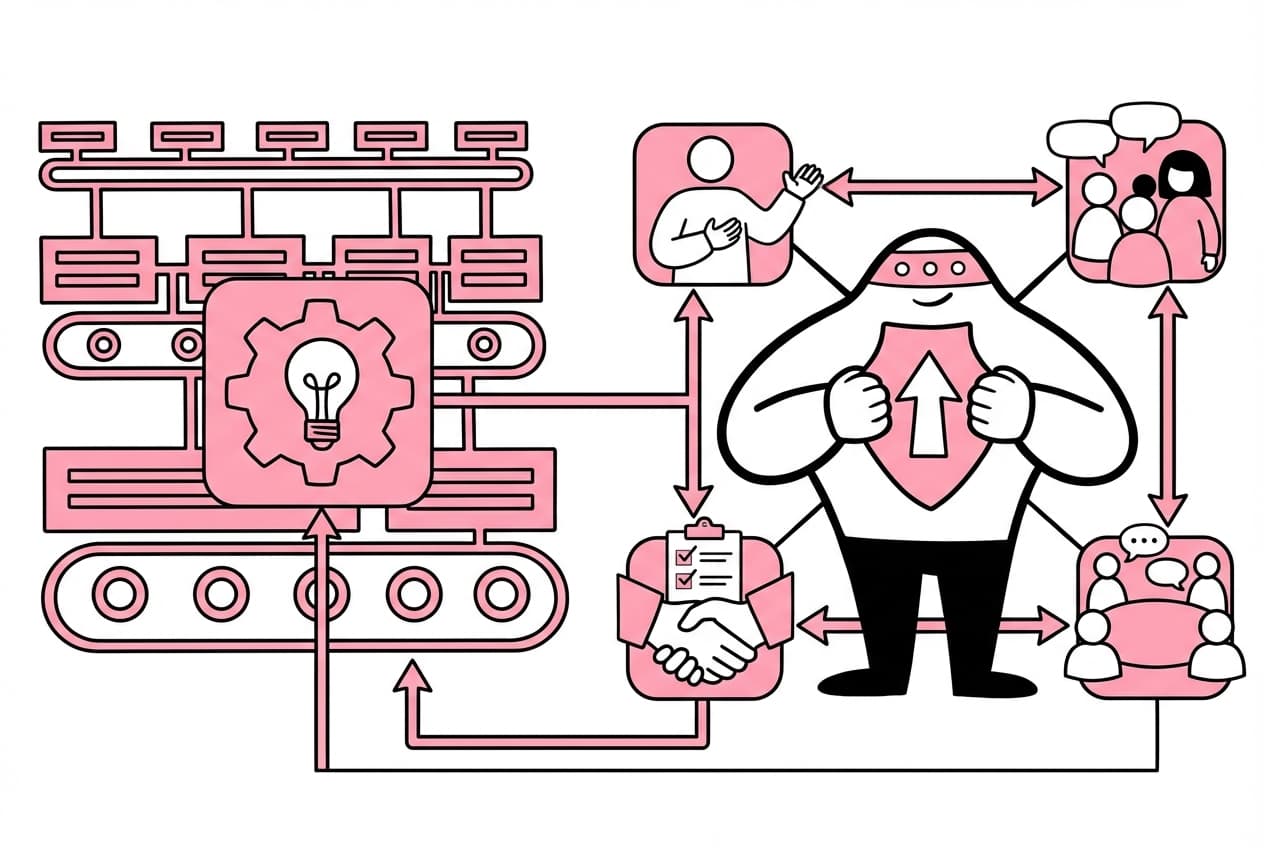
Startups love to talk about culture. Most of the time, culture means a few words on a slide deck that have little connection to how decisions actually get made. At Rippletide, we decided early that our culture had to be specific enough to be useful and honest enough to be real. What follows is how we think about the four pillars that define how we work: innovation, empowerment, accountability, and collaboration.
Innovation With Guardrails
We are building technology that does not have a well-worn playbook. Hypergraph-based reasoning engines for enterprise AI agents are not something you can copy from an open-source repository. That means our team needs the freedom to explore unconventional approaches. But freedom without structure produces chaos, not breakthroughs. We give engineers and researchers clear problem definitions and measurable success criteria, then let them choose the path. The destination is fixed. The route is open.
This approach filters for a particular kind of builder: someone who thrives with autonomy but respects constraints. We have found that the best ideas come from people who understand the boundaries well enough to know which ones are worth pushing.
Empowerment Means Ownership
Empowerment at Rippletide is not about perks or flexible schedules. It means that the person closest to the problem makes the decision. An engineer who discovers a better way to index temporal relationships in our hypergraph does not need to write a proposal and wait for approval. They build a prototype, present the evidence, and if it holds up, it ships. This only works if people feel genuine ownership over their domain, which means we hire for judgment as much as for skill.
Accountability Without Bureaucracy
Accountability is empowerment's counterpart. If you have the authority to make decisions, you also have the responsibility to own the outcomes. At Rippletide, accountability is not enforced through reporting structures or status meetings. It is embedded in how we work. Every project has a clear owner. Every commitment has a timeline. When something does not go as planned, we conduct honest retrospectives focused on learning, not blame.
This balance, empowerment paired with accountability, prevents the two failure modes that kill startups: paralysis from too much process and chaos from too little.
Collaboration Across Distance
Our team is distributed between Paris and San Francisco. Collaboration across time zones requires more than shared Slack channels. It requires deliberate practices: asynchronous documentation that is thorough enough for someone to act on without a follow-up meeting, scheduled overlap hours for real-time problem solving, and a norm of over-communicating context so that no one has to guess at intent.
We treat distributed collaboration as a design problem, not a compromise. The practices we have built to make it work, clear writing, explicit decision records, structured handoffs, make us a better-run company than we would be if everyone sat in the same office.
Culture is not what you say. It is what you do when the pressure is on. At Rippletide, these four pillars are tested every week, and that is exactly how we want it.
Frequently Asked Questions
Four pillars: innovation with guardrails (clear problem definitions, open routes), empowerment as ownership (person closest to the problem decides), accountability with measurable outcomes, and collaboration across research, engineering, and go-to-market teams.
Engineers and researchers get clear problem definitions and measurable success criteria, then choose their own path. The destination is fixed, the route is open. This filters for builders who thrive with autonomy but respect constraints.
 Patrick Joubert